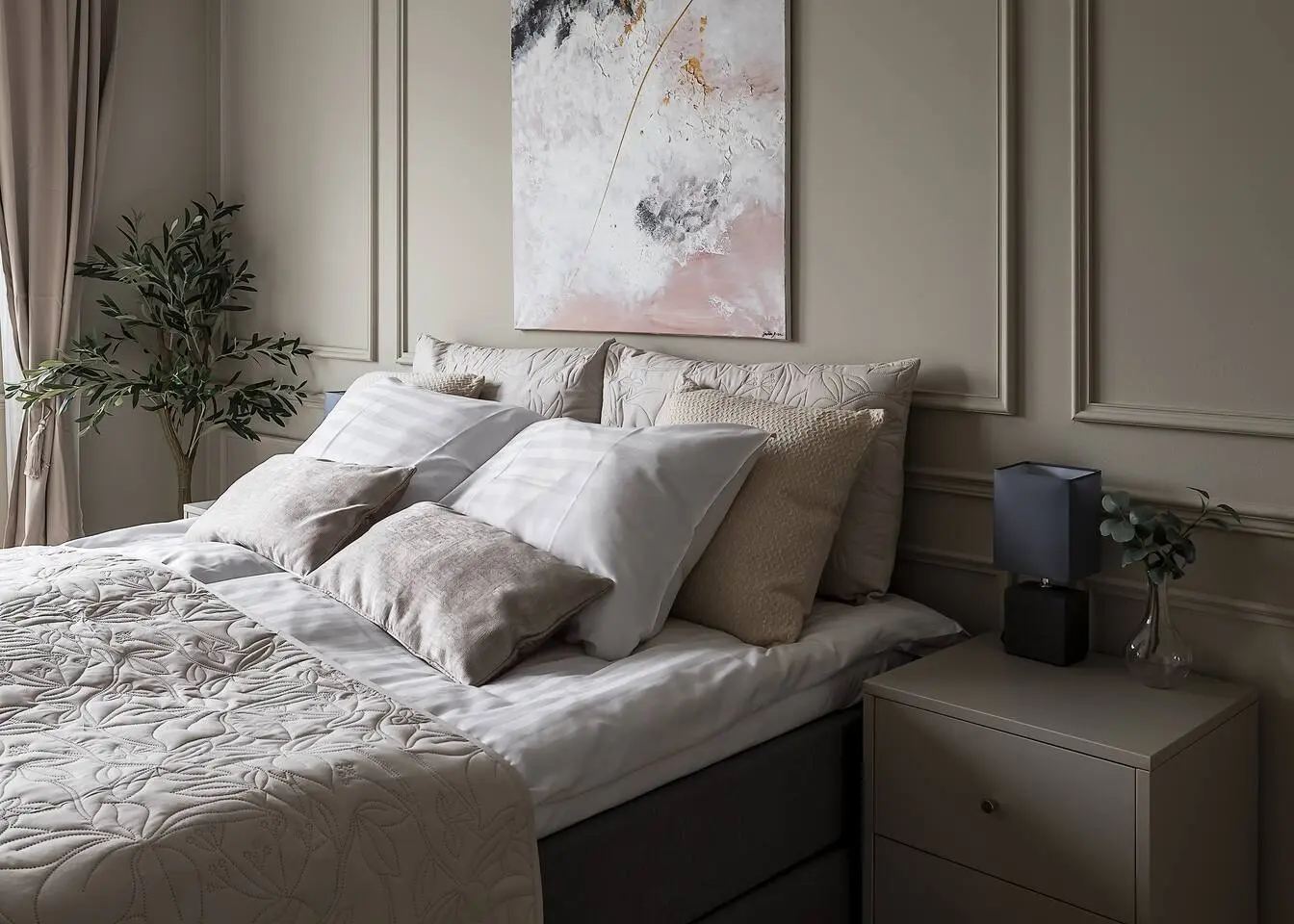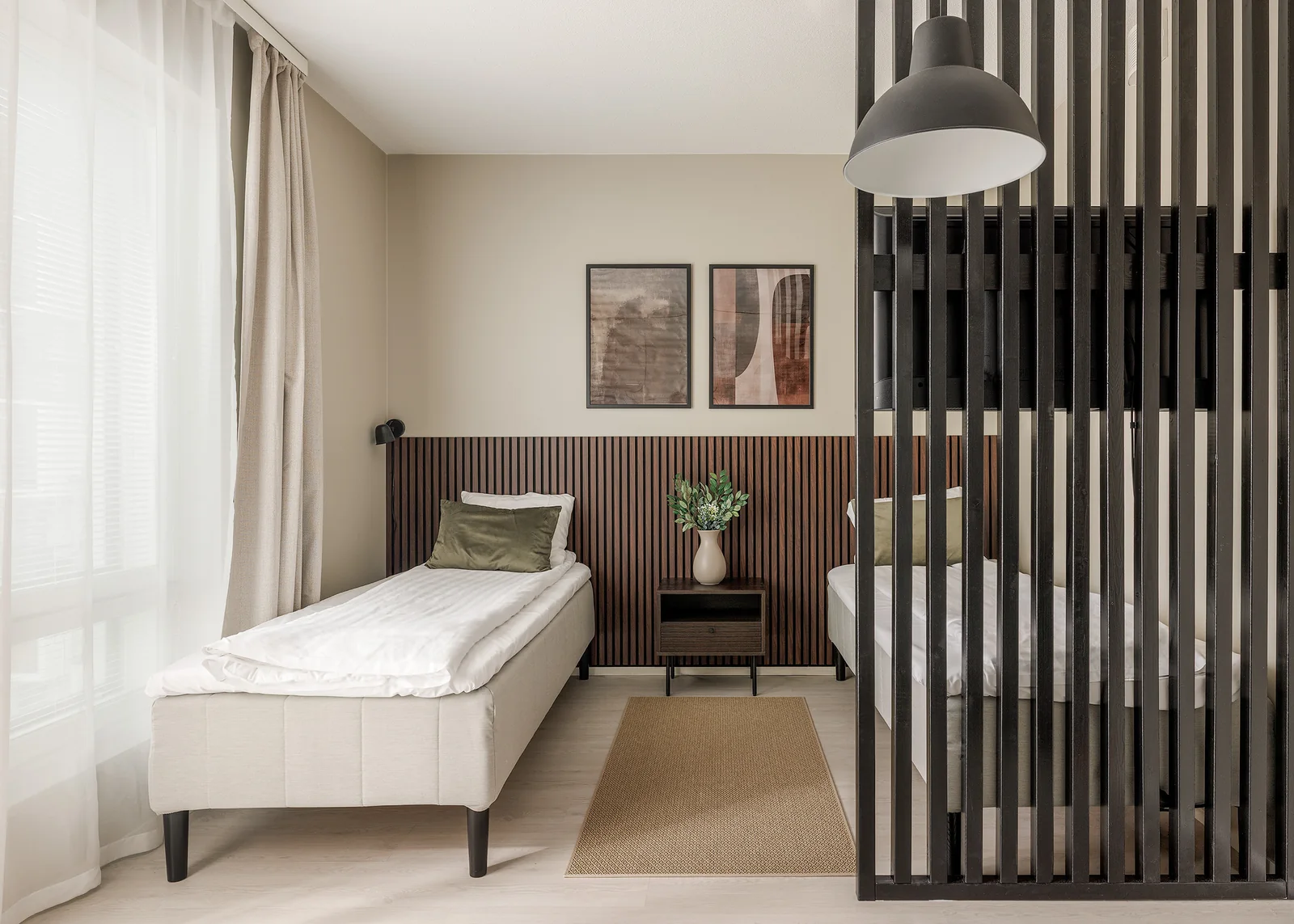
Employee housing for workers: 7 things to check before booking
Author: Mera editorial team
When a company arranges a temporary home for an employee, an empty bed alone is not enough. Good employee housing suits the purpose and duration of the work, supports the employee's everyday life and makes costs and practical arrangements predictable.
The name describes the intended use, but does not alone determine the tax treatment of the accommodation. Before booking, the company should check seven things: need, duration, location, amenities, a peaceful working environment, total price and changes to the arrangement.
In brief
- Choose a home based on the employee's everyday needs, not just the price or postcode.
- Agree in writing on the payer, billing details, arrival and amendment terms.
- Clarify taxation separately with the company's accounting department or a tax specialist.
- Before making a decision, request an answer to all seven points on the checklist.
1. First define why and for how long the accommodation is needed
Here, employee housing means a furnished home arranged by the employer for an employee's temporary needs. It can serve, for example, a work assignment, project, onboarding or a move required for work. Before requesting an offer, record at least the location, place of work, arrival date, estimated departure date and number of residents.
The duration affects what is required from the home. For a stay of a few nights, smooth arrival may be the most important factor. For stays of several weeks or months, a kitchen, laundry facilities, storage and the opportunity to withdraw into one's own space are basic aspects of everyday life.
At Mera, stays of at least 28 nights are directed to a longer-stay service, where the home and service package are adapted to the need. See the practices for longer stays.
Check the tax treatment based on the arrangement
The same term may be used for different arrangements. A home provided by an employer for an employee's use may be treated as a taxable fringe benefit, while accommodation connected to a temporary business trip is assessed under different rules. The outcome depends, among other things, on the place of work, the purpose of the accommodation and who is responsible for the costs.
This article is a practical booking checklist, not tax advice. Check the up-to-date principles in the Finnish Tax Administration's guidance on fringe benefits and the guidance on reimbursement of business travel expenses. If necessary, ask the company's accounting department or a tax specialist for an interpretation before signing the agreement.
2. Adapt the home to the employee's real everyday life
Suitable employee housing supports sleep, meals, work and recovery throughout the stay. Check the room layout and amenities in writing. An interior photograph conveys the atmosphere, but not, for example, the size of the bed, the amount of storage space or whether the home includes a washing machine.
| The company ensures | For the employee, this means |
|---|---|
| The right bed and sufficient privacy | A peaceful place to rest after the working day |
| A kitchen and necessary equipment | The opportunity to prepare ordinary meals |
| Laundry facilities and storage space | Everyday life works even during a long stay |
| A workstation, lighting and power sockets | Remote work or evening work is possible when needed |
| Internet availability and support in case of disruptions | There is a clear procedure for connection problems |
If the employee is moving in with a spouse, child or pet, mention this in the request for an offer. Mobility limitations, night work, the need for separate bedrooms and an unusually large amount of work equipment may also change which home is practically suitable.
3. Choose the location according to the daily routine
The best location reduces daily friction. Assess the journey to work during the employee's actual working hours and using the mode of transport they will use. A simple kilometre count or map view does not reveal how smoothly a shift that starts early in the morning or ends late in the evening will work.
Check before booking:
- the journey to work on foot, by bicycle, car or public transport
- the availability, price and possible restrictions of parking
- connections to the station, port or airport if the employee travels frequently
- access to a grocery store and other everyday services
- noise and the suitability of the surroundings for rest periods.
In Turku, the needs of the city centre, port, university and hospital area may lead to different choices. In Pori, proximity to the workplace, campus or travel centre may be decisive. So start with the working day, not the reputation of the area.
Ensure arrival before the day of travel
The employee should receive the address, access instructions, parking information and contact person's details well in advance. If arrival takes place late, make sure the key or door code works without an appointment that must be arranged on site.
Provide the instructions in the language the employee needs. Good support does not mean constant communication, but rather that the resident knows in advance what to do in an exceptional situation.
4. Compare the total price and agree on changes in advance
The nightly price alone does not reveal the total cost of the accommodation. Request an offer for the entire period and confirm which services are included in the price. For a corporate customer, clear invoicing and amendment terms may be just as important as the price itself.
Request a written breakdown of at least the following:
- accommodation for the entire agreed period
- electricity, water and internet
- bed linen, towels, and final and interim cleaning
- parking
- additional people and pets
- invoicing schedule, payment terms and invoice reference details
- terms for extending, shortening or cancelling the stay
- any deposit and the handling of damage situations.
Also confirm whether the company or the employee makes the booking and whose name the invoice is addressed to. If the end date of the work period may change, agree before booking how the change will be reported and when the price or availability will be reconfirmed.
5. Use the seven-point checklist
Go through this list with the service provider and the employee before confirmation:
- Need: why is the accommodation needed and who will live there?
- Duration: what are the arrival date, estimated departure date and possible need for an extension?
- Location: how will the employee travel to the workplace during normal working hours?
- Everyday life: are the bed, kitchen, laundry facilities and storage sufficient?
- Peaceful working environment: are the necessary workstation, internet connection and quiet space available?
- Cost: what is the price for the entire period and what does it include?
- Practical arrangements: how will invoicing, arrival, support and changes be handled?
If there is no clear answer to any point, request more information before signing the agreement. The same list can be used to create a repeatable accommodation guide for the company: the next booking will be faster when the necessary information and approval responsibilities have been defined in advance.
A temporary home, a permanent standard
Employee housing works best when the company's process and the employee's everyday life are planned together. When the need, duration, home, price and responsibilities are clear, the employee can focus on their work and the company knows what it is booking.
In Mera's corporate accommodation in Turku and Pori, the same contact person helps with finding a suitable home, invoicing and practical arrangements. Tell us about your accommodation needs, and we will find an option that suits the employee's everyday life.
Frequently asked questions
Can a company book employee housing for a worker?
Yes. A company can agree with the service provider on the booking, payer, invoicing and the resident's practical details. The tax treatment is assessed separately based on the purpose and circumstances of the arrangement.
Is a hotel room suitable as employee housing?
A hotel room may work for a short business trip. For a longer stay, a furnished home is often more practical if the employee needs a kitchen, laundry facilities, storage space, a workstation or more privacy.
Can employee housing be used for several months?
Yes, if the home and contract terms are suitable for a long stay. In that case, check storage, the kitchen, laundry facilities, workspace, total price, amendment terms and the needs of any family members in particular.